Turning connected vehicle data into actionable security intelligence
Connected vehicles generate enormous amounts of security-related telemetry.
But data alone does not create cybersecurity value.
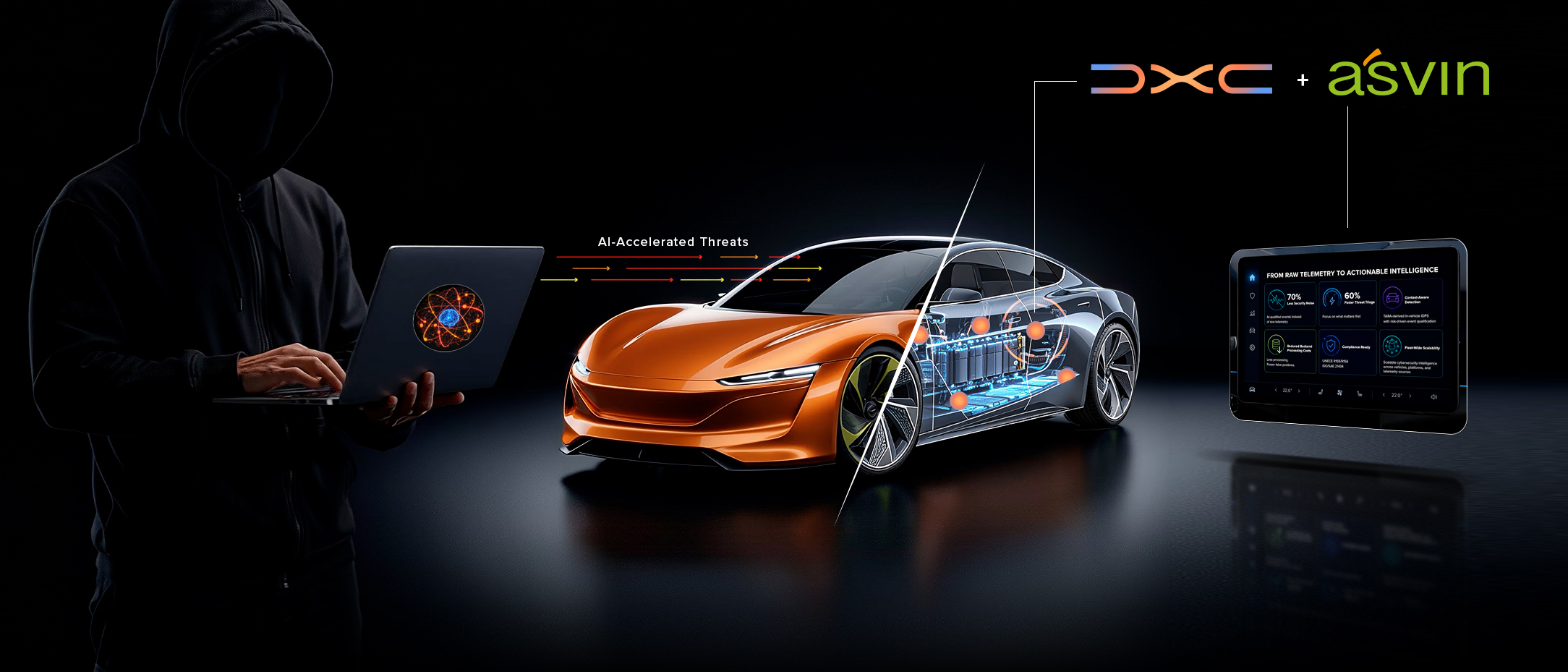
DXC Technology and asvin combine in-vehicle cybersecurity detection with AI-driven Cyber Threat Intelligence (CTI) to transform raw vehicle telemetry into contextualized, risk-qualified security insights.
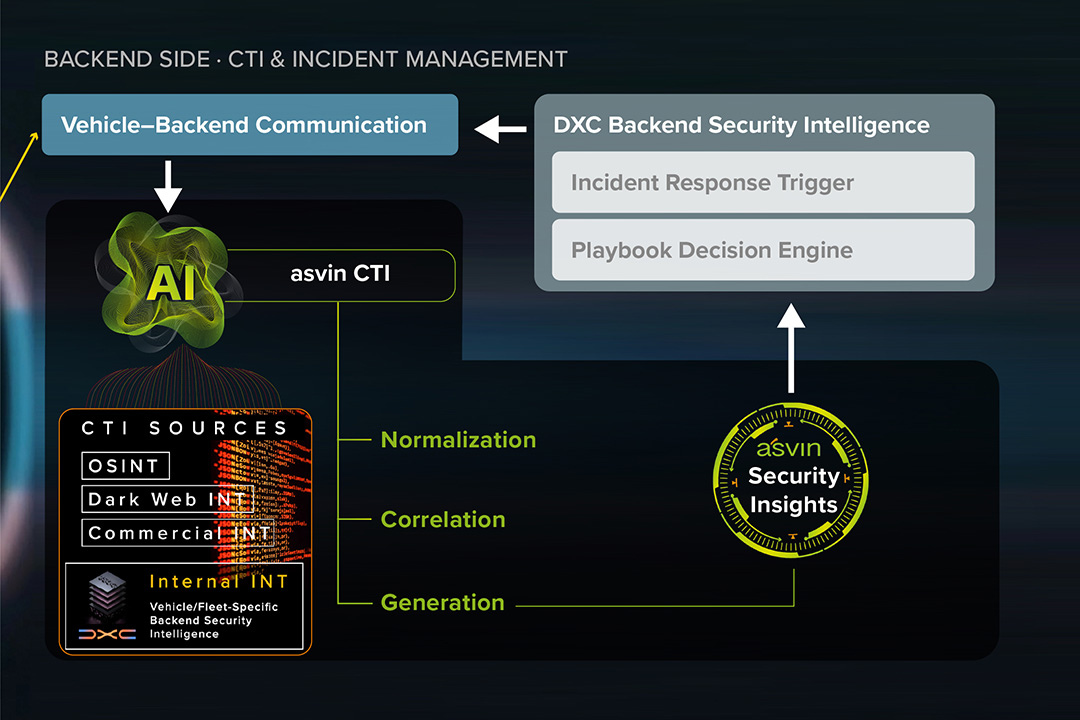
By connecting vehicle-level detection with intelligent threat analysis, the partnership enables a continuous cybersecurity chain – from detection inside the vehicle to informed response in automotive Security Operations Centers (SOCs).
The Challenge
Connected vehicles create data. Security teams need intelligence.
Modern vehicles generate massive amounts of security telemetry across increasingly complex software and electronic architectures.
However, traditional backend-centric security approaches often lack the vehicle-specific context required to distinguish relevant threats from normal activity. The result is increased noise, false positives, and slower incident response.
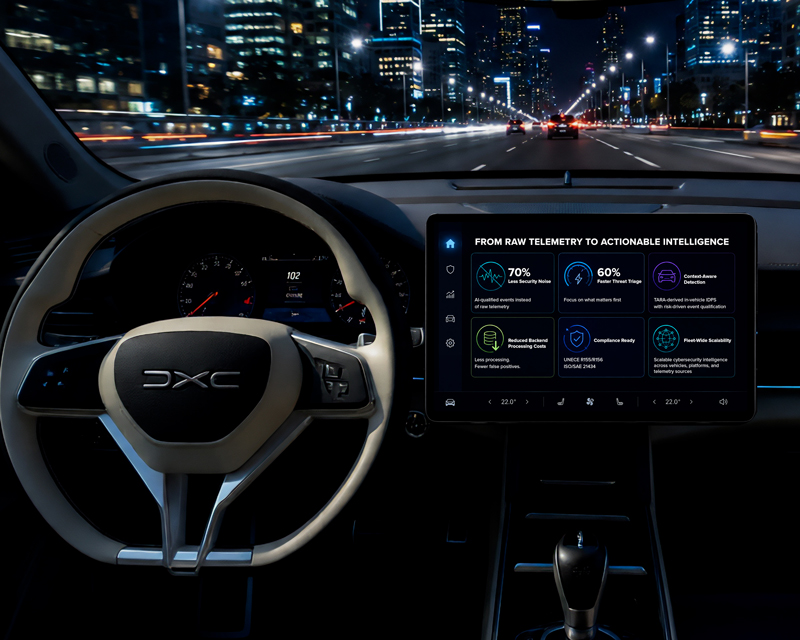
At the same time, AI-enabled attack methods are increasing the speed and sophistication of cyber threats. Combined with growing regulatory requirements such as UNECE R155/R156 and ISO/SAE 21434, automotive organizations need a continuous cybersecurity approach that connects in-vehicle security engineering with Cyber Threat Intelligence.
The challenge is clear: turning large volumes of vehicle data into meaningful security decisions.
The Solution
Bringing cybersecurity intelligence closer to the vehicle
DXC Technology and asvin bridge the gap between vehicle-level detection and backend threat intelligence.
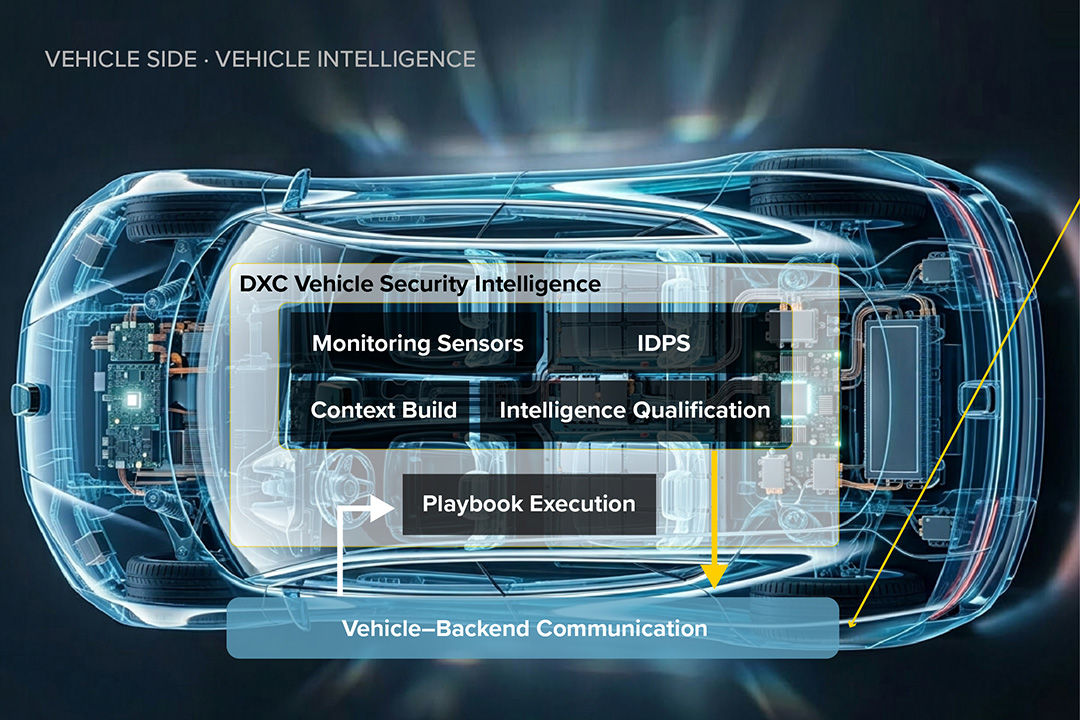
DXC Luxoft applies TARA-based risk analysis and tailored Intrusion Detection and Prevention System (IDPS) logic directly within the vehicle to generate curated, context-rich security events.
Instead of forwarding raw telemetry, vehicles can provide security intelligence linked to relevant threats, attack paths, and monitored assets.
asvin complements this approach with an AI-driven Cyber Threat Intelligence platform that correlates vehicle-generated security events with external threat intelligence sources. This enables faster identification, prioritization, and analysis of relevant cybersecurity risks.
By combining automotive cybersecurity expertise with contextualized threat intelligence, the partnership creates a continuous detection-to-response workflow — helping security teams make better-informed decisions and proactively protect connected vehicle fleets.
The Outcome
From security data to actionable insights
The DXC Technology and asvin project demonstrates how combining in-vehicle detection with AI-driven Cyber Threat Intelligence can transform raw telemetry into risk-qualified security intelligence.
Integrated into existing OEM data flows, the solution helps reduce security signal noise, accelerate threat analysis processes, and improve the efficiency of backend security operations.
The result is a scalable approach designed to support fleet-wide cybersecurity, regulatory requirements, and modern automotive SOC operations.
Key Benefits:
A stronger cybersecurity foundation for connected vehicles
As vehicles become increasingly connected and software-defined, cybersecurity requires more than collecting data.
The future of automotive security depends on transforming data into intelligence – and intelligence into action.
DXC Technology and asvin enable this transition by connecting vehicle-level security detection with AI-driven Cyber Threat Intelligence.