THE CHALLENGE
More information. A harder question: what matters to us?
Vulnerability disclosures, threat reports, attack campaigns and supplier alerts all compete for attention. Each may describe a real development, but its significance depends on the organisation receiving it.
- Is the affected technology in use?
- Which business services depend on it?
- What is known about exploitation, exposure and safeguards?
The answers often sit across security, IT, business teams and suppliers.
Cyber Threat Intelligence helps bring those perspectives together, so organisations can understand why a development may matter and what deserves attention next.
UNDERSTANDING CYBER THREAT INTELLIGENCE
Understand threats. Inform security decisions.
Cyber Threat Intelligence (CTI) turns information about cyber threats into context that supports better decisions. It helps organisations understand what is happening, whether it could affect their business and what deserves attention next.
CTI can provide value on its own, including for organisations without a SOC or SIEM. Where those capabilities are in place, CTI can inform security operations, while operational findings can enrich the threat assessment.
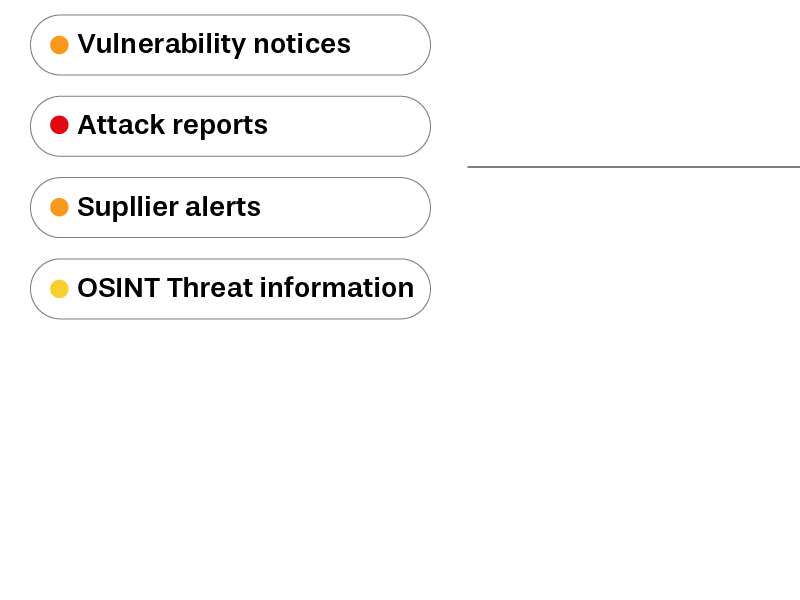
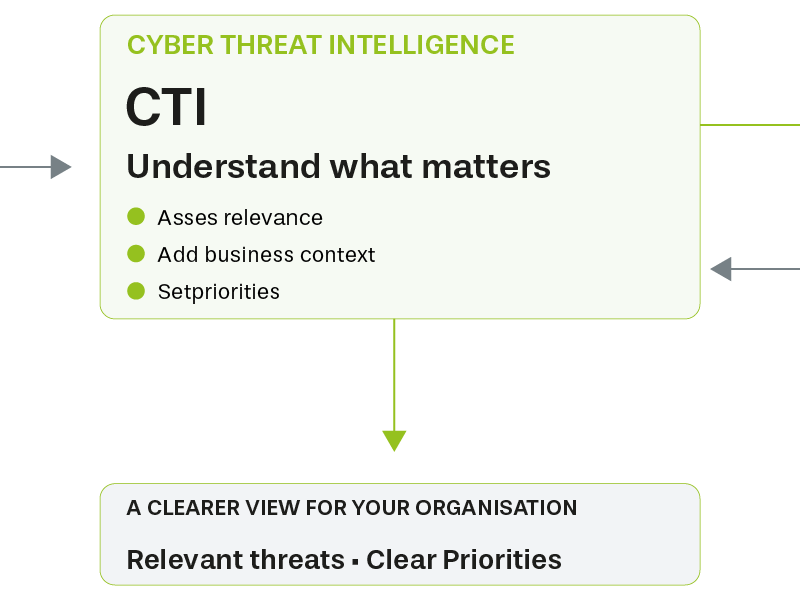
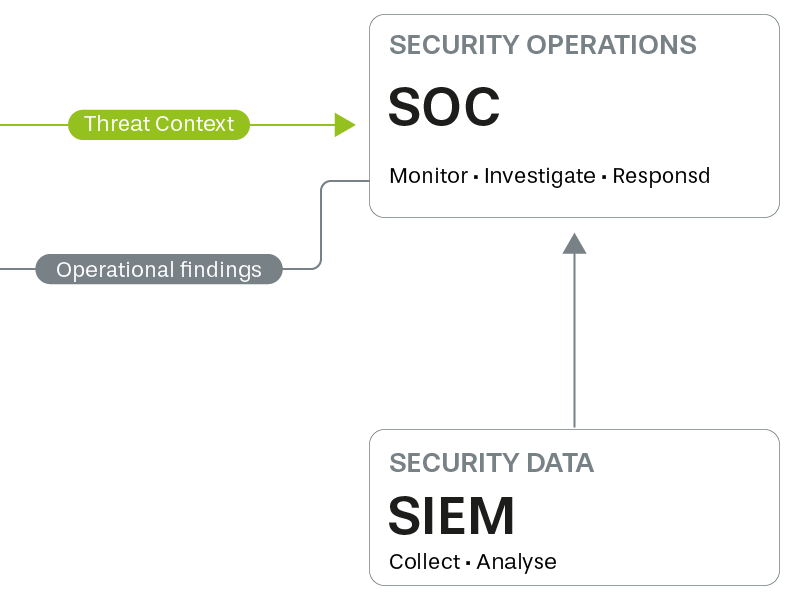
CTI works on its own and can complement a SOC or SIEM.
FREE GUIDE FOR DECISION-MAKERS
Which cyber threats deserve your attention?
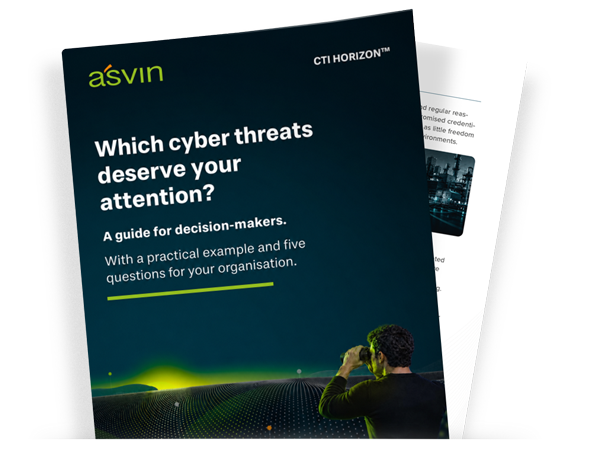
Our guide explores what supports a sound threat priority, how an initial signal can become a specific assessment task and which questions can help your organisation review its approach.
It includes a practical example and five questions for decision-makers and security teams.
FROM INFORMATION TO ACTION
A threat signal is a starting point for assessment.
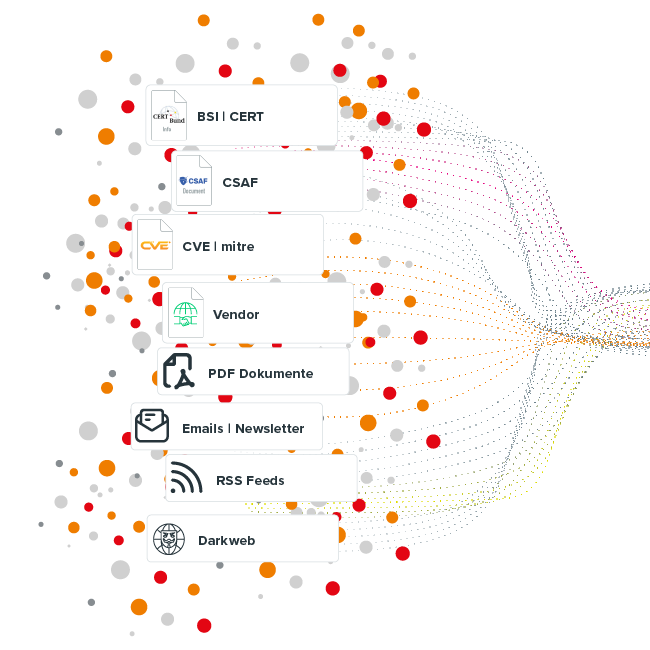
A vulnerability, attack campaign or supplier alert does not by itself establish how an organisation is affected. A useful assessment connects external information with business context, separates confirmed facts from indications and identifies what still needs to be checked.
That gives decision-makers and specialists a shared basis for deciding what to investigate, who should do it and when a response is needed.
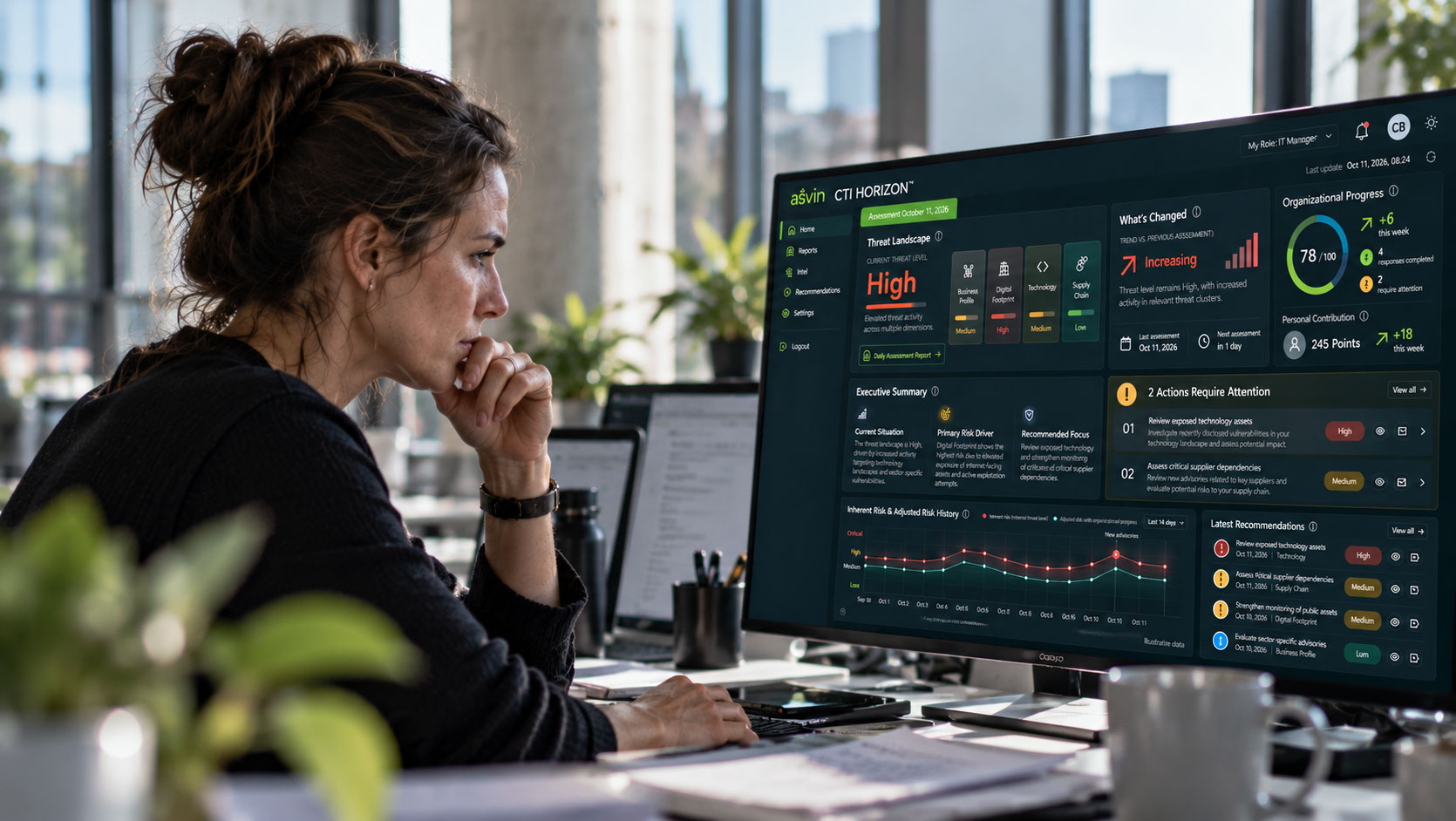
See how CTI HORIZON™ turns external threat signals into context-based priorities your team can act on.
THE ROLE OF AI
Use AI to keep pace with the volume of threat information.
AI can help structure and assess large volumes of threat information, making it easier to focus on developments that may matter to an organisation.
Context and evidence remain essential. Specialists validate important findings, resolve knowledge gaps and decide what action is appropriate. AI-supported analysis can help teams process information at scale while keeping the assessment understandable and accountable.
A BASIS FOR PRIORITISATION
A clear priority has a reason behind it.
These five questions help organisations assess why a threat deserves attention and what they need to learn next.
01
Business relevance
Is the affected technology, product or provider relevant to your organisation?
02
Evidence
What is known about the threat? Is exploitation observed, reported or considered possible?
03
Operational impact
Which services, processes or dependencies could be affected?
04
Technical conditions
Could the issue affect your environment, given its exposure and safeguards?
05
Urgency and open questions
What needs to be clarified, by whom and in what timeframe?
A priority is a reason to assess. The findings establish whether further action is needed.
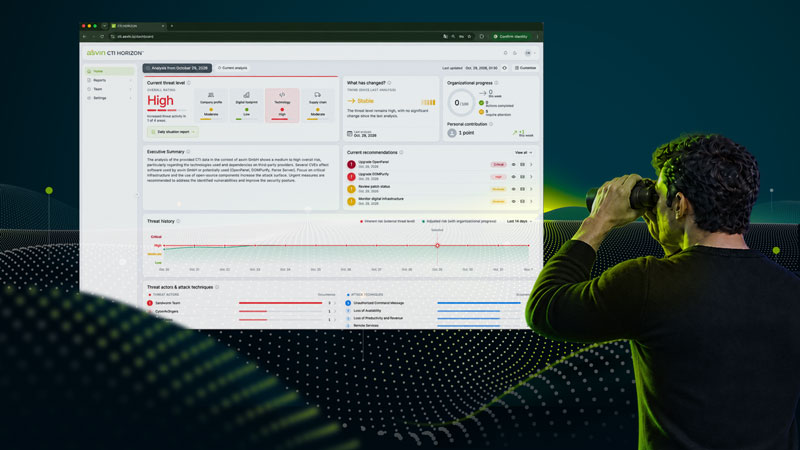
See which cyber threats matter to your organisation—and what deserves attention next
CTI HORIZON™ uses AI-supported analysis to assess external threat information in available business context. It presents prioritised developments in a decision-focused situation picture for management, information security and operational teams.
Organisations can start with external information and public business context—without a permanent connection to internal IT or OT systems.
INSIGHTS & PERSPECTIVES
Insights into a changing threat landscape
Explore Cyber Threat Intelligence Insights


CONTACT
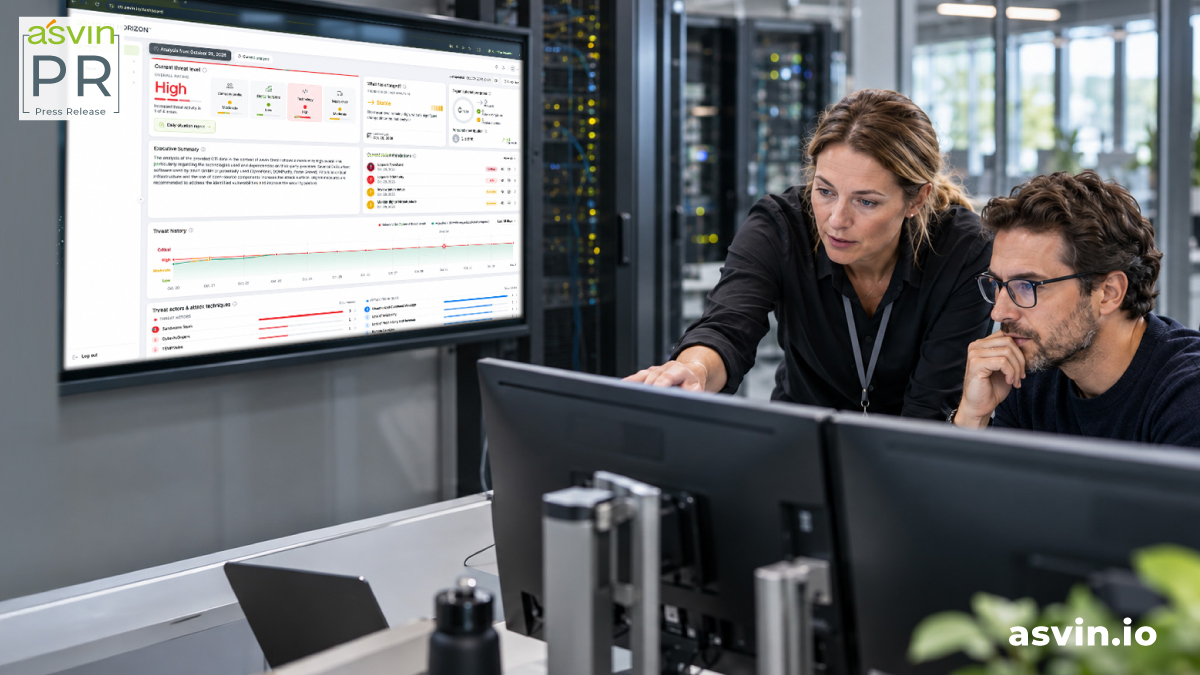
In an initial consultation, we’ll show you how
CTI HORIZON™ adds value to your organization.
See in a demo how CTI HORIZON™ assesses your threat landscape and turns it into clear priorities.
30 minutes
Teams or on-site
Direct Communication
with our experts
Confidential
and non-binding