CYBERSECURITY FOR CRITICAL INFRASTRUCTURE
Know which cyber threats matter to essential services
Across energy, water, transport, healthcare and public services, critical infrastructure cybersecurity teams face a constant flow of threat information, and too little time to review every alert in detail.
The key question is which threats could affect your systems, services or suppliers—and what your team should focus on first.

THE PRESSURE ON KRITIS OPERATORS
Threats change faster than teams can assess them.
Critical infrastructure operators must keep essential services running while monitoring a changing cyber threat landscape. Geopolitical tensions, evolving attack methods and connected systems all add to the challenge.
Security teams receive more alerts and advisories than they can investigate one by one. They need to know which threats could affect their services, systems or suppliers—and who needs to act on that information.
- Could this threat affect a service we operate?
- Does it involve systems or suppliers we depend on?
- Who needs to know, and what should happen next?
REGULATORY PRESSURE
NIS2 makes cyber risk an ongoing responsibility.
NIS2 puts greater emphasis on cybersecurity risk management, incident handling and supply chain security for many organizations. In Germany, the national implementing law has been in force since December 2025. Whether specific obligations apply depends on the organization and its scope under the law. [See the BSI’s NIS2 information]
For KRITIS operators, understanding the NIS2 requirements is only part of the task. Teams also need to assess changing threats and share relevant information with the people responsible for acting on it.
THE GROWING DECISION GAP
Threat activity outpaces available security capacity.
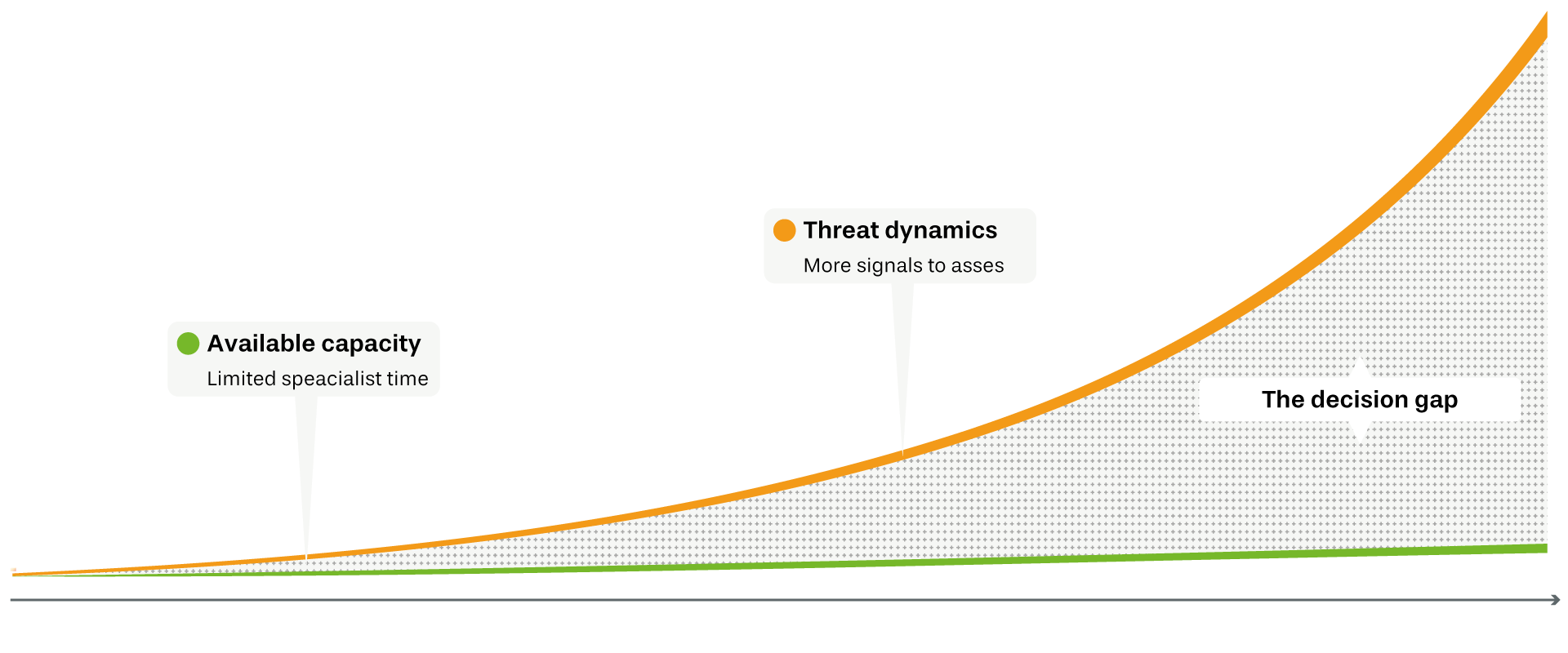
Illustrative comparison: orange represents cyber threat dynamics, green represents available cybersecurity capacity. The shaded area shows the challenge of assessing relevant threats with limited specialist resources in critical infrastructure.
AI is accelerating parts of the threat landscape. For municipal utilities, local authorities and other critical infrastructure operators, the challenge is to identify which developments could affect essential services—and give security, technical and operational teams clear, role-relevant information.
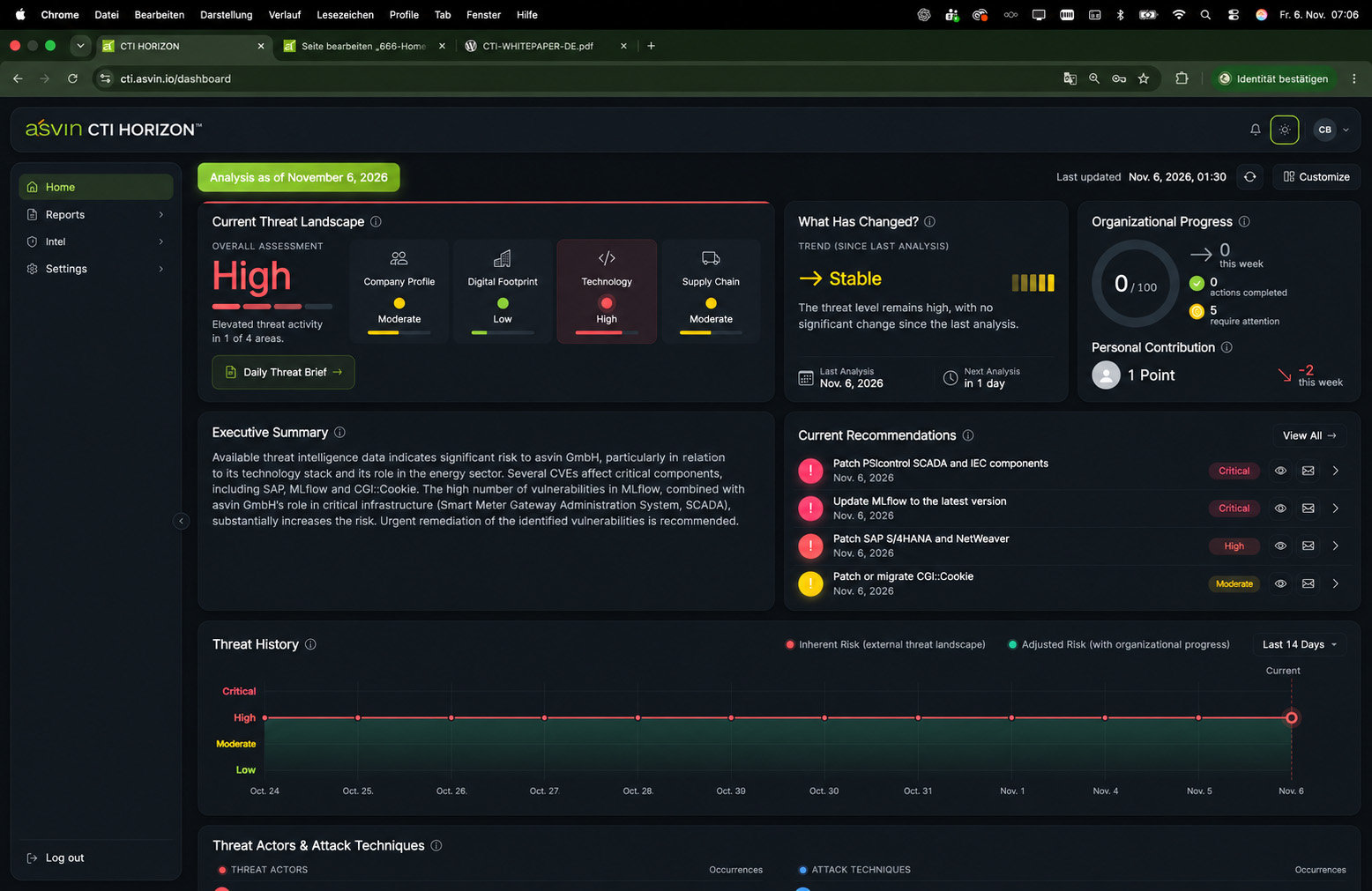
Threat intelligence made clear at a glance—for the teams protecting essential services.
CTI HORIZON™ matches incoming threat intelligence across your feeds with your organization’s context. It surfaces the alerts and recommendations relevant to your organization, helping your team focus on information connected to its systems and operations.
Rather than manually sorting through a high volume of incoming information, teams can work from a view shaped by their own environment.
A CLOSER LOOK AT LOCAL CRITICAL INFRASTRUCTURE
Local services. Connected risks.
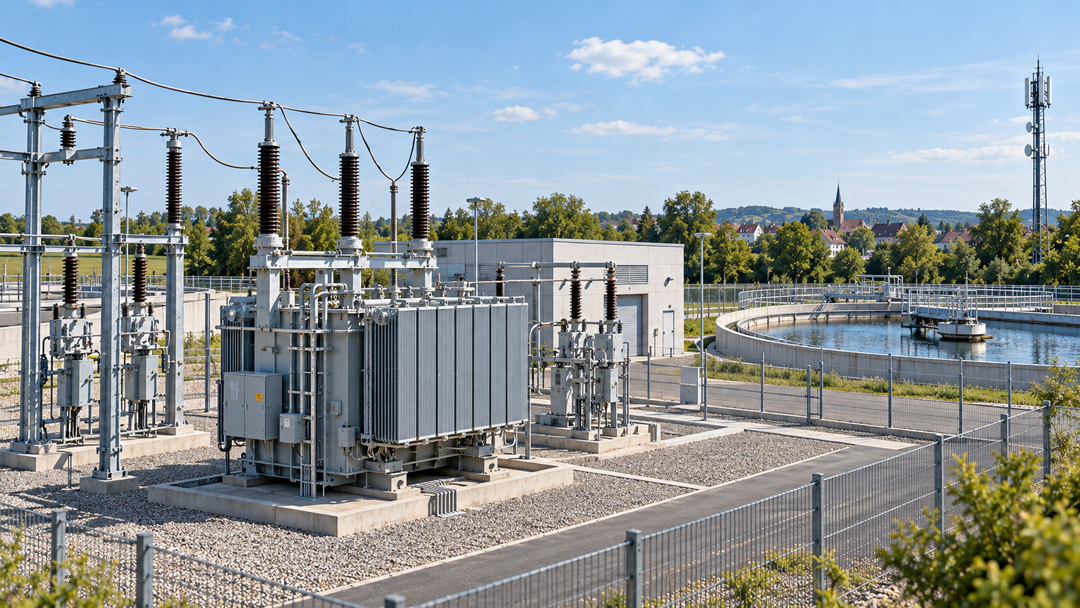
A municipal utility may need to assess whether a new security advisory relates to systems supporting its energy or water services. A local authority may need to understand whether a threat affects a digital service delivered by an external provider.
The systems and responsibilities differ from one organization to another. Security teams, technical specialists and operational leaders also need different levels of detail. Role-based reports help each stakeholder understand what the threat could mean for their responsibilities and what may need attention.
ACROSS THE CRITICAL INFRASTRUCTURE LANDSCAPE
Different sectors. Essential services at stake.

Critical infrastructure spans sectors with distinct technologies, operating conditions and responsibilities. Operators share the need to protect service availability, coordinate across IT and OT, understand dependencies and make informed decisions with limited specialist capacity.
asvin addresses critical infrastructure cybersecurity, with a particular focus on municipal utilities and local authorities.
DOWNLOADS
Knowledge to take with you
A practical guide for decision-makers
A new vulnerability, attack campaign, or supplier incident can demand attention.
But what does it mean for your organization?
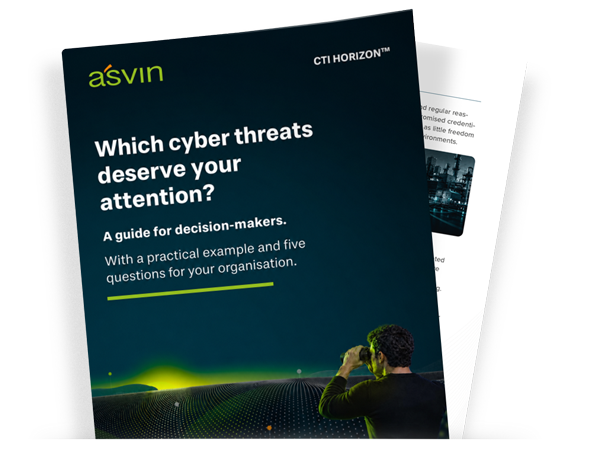
WHITE PAPER
Which cyber threats deserve your attention?
Learn how to assess the business context behind a threat, distinguish confirmed facts from open questions, and turn relevant findings into clear priorities.
PDF | 8 Pages
A BROADER VIEW OF CYBER RISK
Connect threat intelligence to wider priorities.

When your organization needs to connect threat intelligence with a broader view of cyber risks, Risk by Context™ can add another layer of prioritization. CTI HORIZON™ remains the starting point for matching incoming threat information with your organization’s context
INSIGHTS & PERSPECTIVE
Insights for those keeping essential services running.
Explore expert perspectives on cyber threats, OT security and resilience across critical infrastructure.


CONTACT
Let’s talk about your cybersecurity priorities.
Whether you’re exploring CTI HORIZON™ or working through broader cybersecurity challenges, tell us what matters to your organization. We’ll discuss where asvin’s expertise may be able to help.
Direct exchange
Tell us what your organization is working on
Relevant expertise
CTI HORIZON and broader cybersecurity topics
Confidential
No obligation

CEO & Gründer
Your contact for cybersecurity strategy, situational awareness, and implementation.