
AUTOMOTIVE CYBERSECURITY
Prepare for the next era of automotive cybersecurity.
Cyber risks are evolving as connected vehicles become more software-defined and increasingly shaped by AI. asvin helps automotive organizations tackle these challenges in their specific context.
THE CHALLENGE
Navigating a Complex and Evolving Automotive Threat Landscape
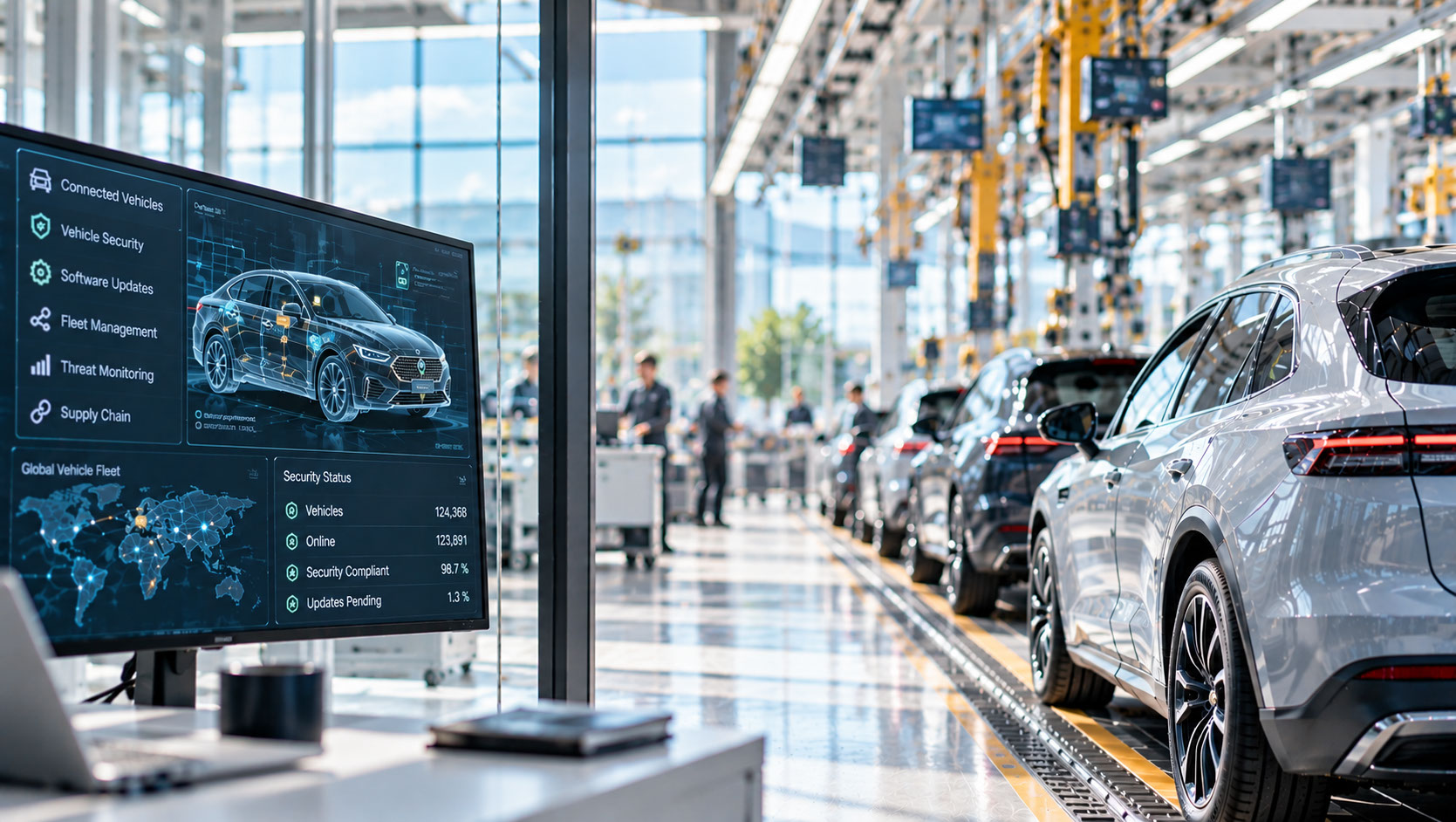
The shift towards software-defined and increasingly AI-enabled vehicles is changing the automotive cybersecurity landscape. Challenges can arise across development, production and post-production, involving complex E/E architectures, domain ECUs and relationships across the supply chain.
Automotive organizations need to understand how emerging threats relate to their own structures, responsibilities and risk management. The right response depends on the specific challenge and its context.

AI-RELATED THREATS
Understanding the Impact of AI on Automotive Cybersecurity

AI is changing the threat landscape for the automotive industry. New and evolving threats need to be considered within automotive cyber risk management frameworks.
Malicious AI-enabled attacks may create risks across several areas, including vehicle safety, operational disruption, financial loss, privacy, public trust and reputation. Understanding the context and potential consequences of these threats – for example through Cyber Threat Intelligence – helps organizations make informed decisions about where to focus their attention.
OEMs & SUPPLY CHAINS
Automotive Supply Chain Security: Challenges Cross Organizational Boundaries
Automotive cyber risks can span OEMs, Tier-1 and Tier-2 suppliers, and other partners across the mobility ecosystem. This can make it difficult to understand how a threat or incident affects responsibilities, relationships and risk management across an organization.
asvin works with organizations to explore cybersecurity challenges in their specific context. Risk by Context™ and CTI HORIZON™ are part of asvin’s offering. The appropriate way to engage depends on the challenge being discussed.
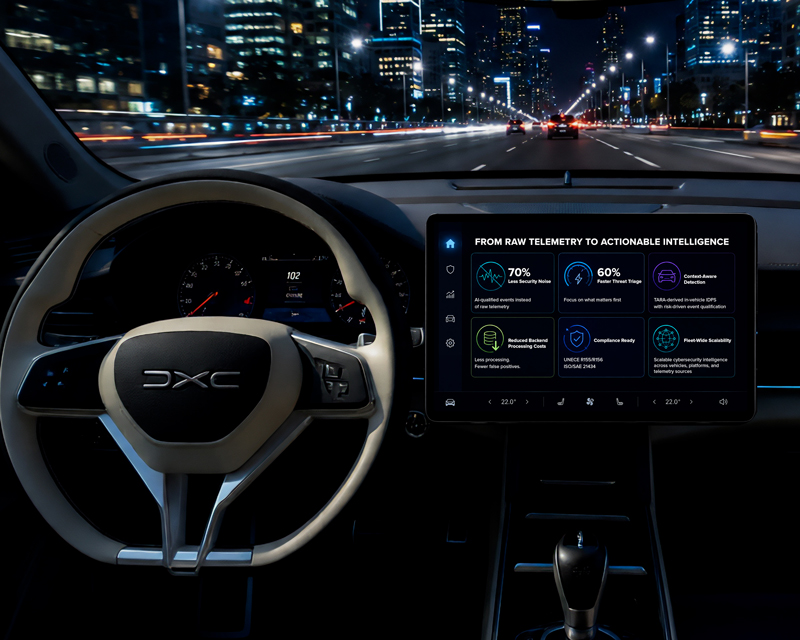
Connecting vehicle security events with Cyber Threat Intelligence.
Connected vehicles can generate large volumes of security-related telemetry. In a joint use case, DXC Technology / DXC Luxoft and asvin explored how vehicle-level security events could be connected with Cyber Threat Intelligence.
DXC Luxoft applied TARA-based risk analysis and tailored intrusion detection and prevention (IDPS) logic in the vehicle to generate curated security events with vehicle-specific context. asvin correlated these events with external threat intelligence sources. The Cyber Threat Intelligence capability used in this case also underlies CTI HORIZON™.
The case illustrates one way the partners addressed a specific cybersecurity challenge: connecting detection in the vehicle with threat analysis and response in the backend. It is an example of collaborative problem-solving in an automotive context.
CUSTOMERS & PARTNERS
Working with Automotive Organizations and Ecosystem Partners
Automotive cybersecurity challenges rarely stop at company boundaries. asvin works with automotive customers and partners on issues ranging from emerging risks such as Shadow AI and unclear access rights to Cyber Threat Intelligence and supplier patch management.
As software update cycles accelerate, they do not always align across suppliers. For legacy products, contracts may not clearly define who is responsible for security patches—or for how long.

Customer

Partner

Partner

Partner
INSIGHTS & PERSPECTIVES
Insights for a changing automotive threat landscape
Explore Automotive Cybersecurity Insights
CONTACT
Let’s talk about Automotive Cybersecurity.
Talk to Mirko Ross about a challenge affecting your OEM organization. In an initial conversation, you can explore whether asvin may be able to support your specific situation.
Direct exchange
Tell us what your organization is working on
Relevant expertise
Agentic AI and broader cybersecurity topics
Confidential
No obligation

Mirko Ross
CEO & Gründer
Your contact for automotive cybersecurity strategy, AI powered cyber threat intelligence, and implementation.